3 April 2020. India was three weeks into lockdown when twelve young artists across the country submitted digital works to a one-day online exhibition. A new work every half hour. Discussion open to all.
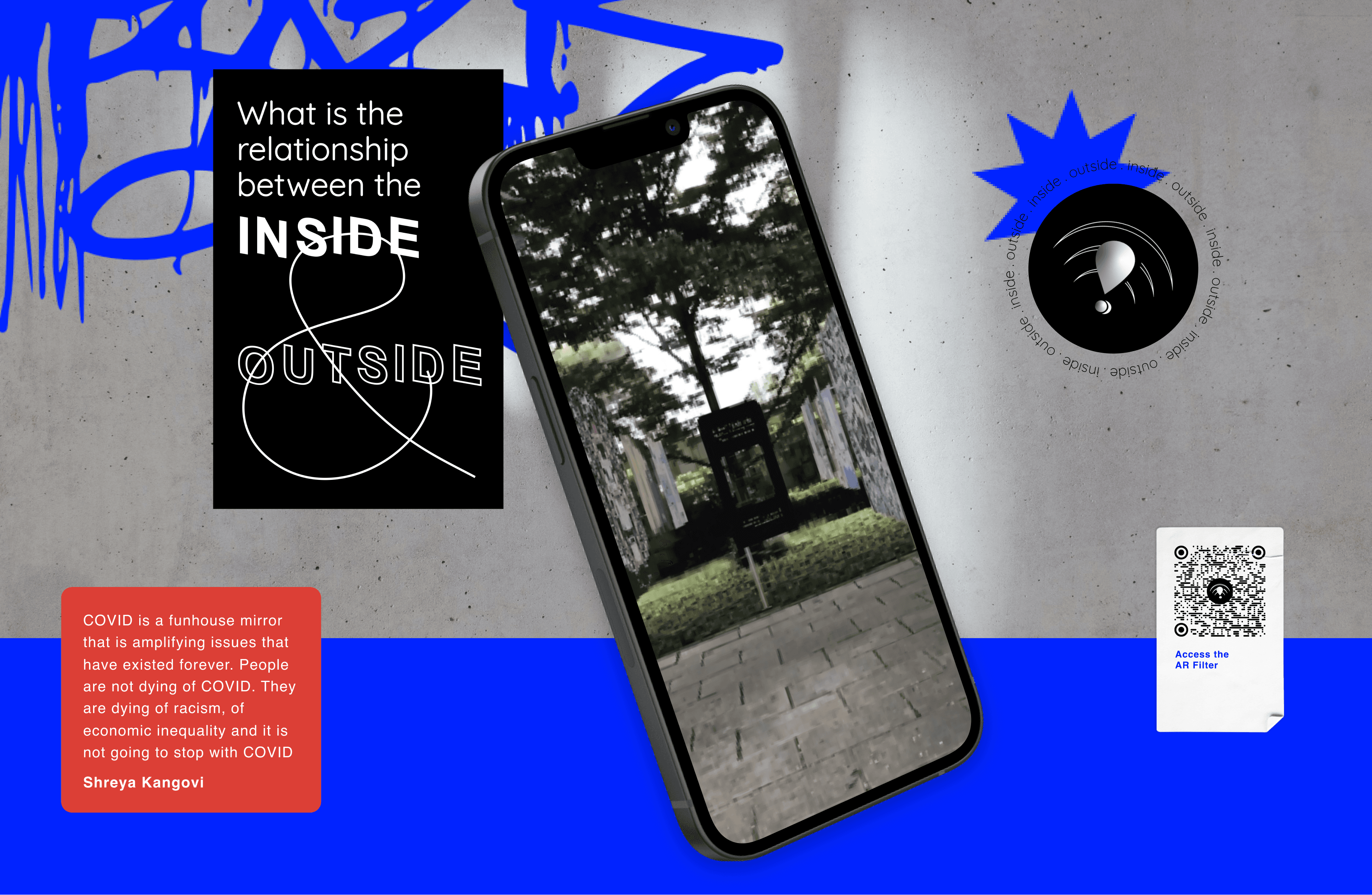
Offline began with a question the pandemic had made suddenly unavoidable: what does it mean to be inside, and what does it mean to be outside? Not metaphorically. Literally. Who gets to stay home, and who cannot afford to?
The crisis had drawn a sharp line. Those with access to technology, to stable homes, to the luxury of pausing their income, were consuming the pandemic through screens. Those deemed essential, the workers who kept cities functioning, were being pushed into an outside that those indoors could only imagine. Digital connection was supposed to bridge that gap. But access to it was never equal either.
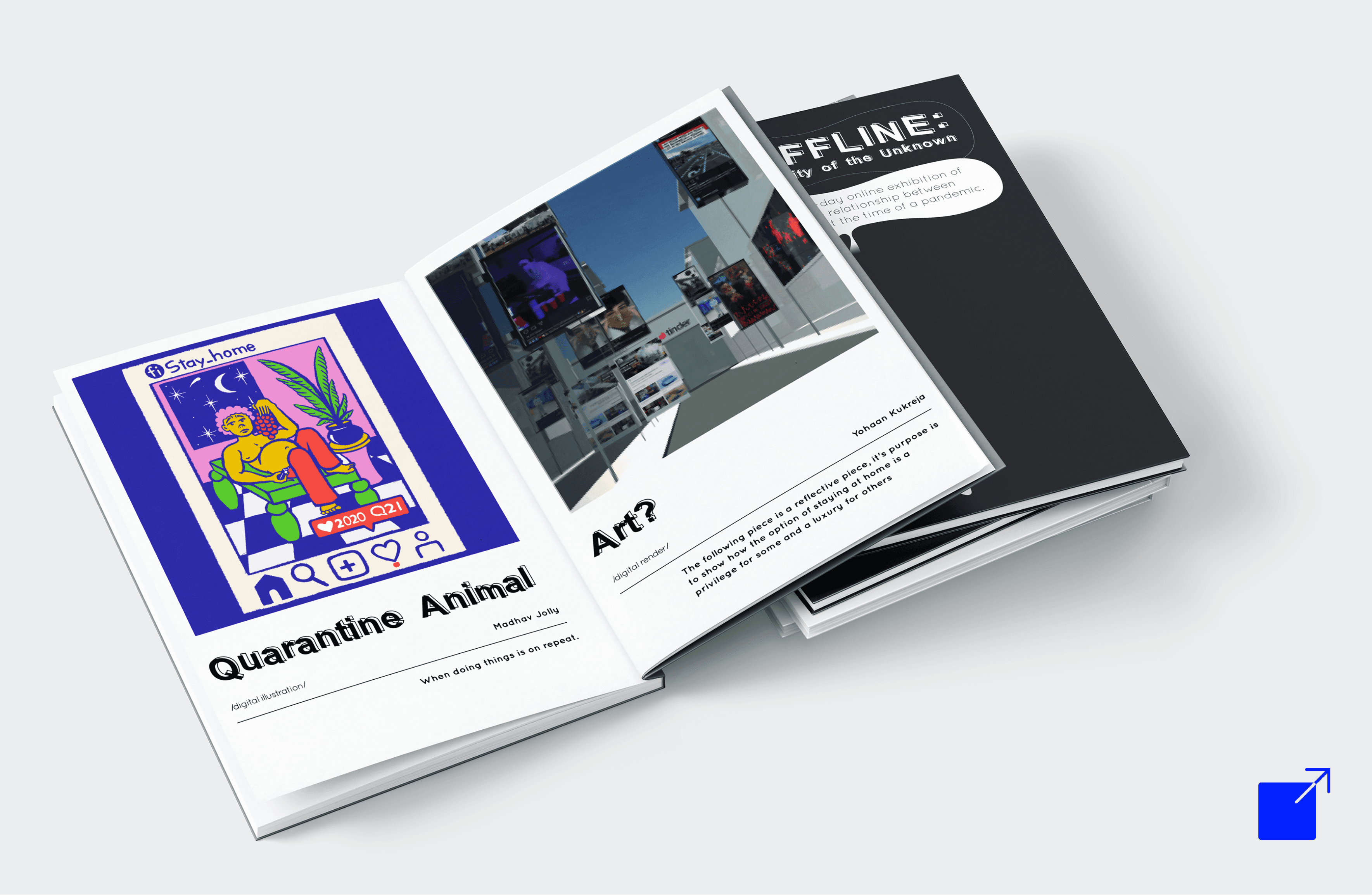
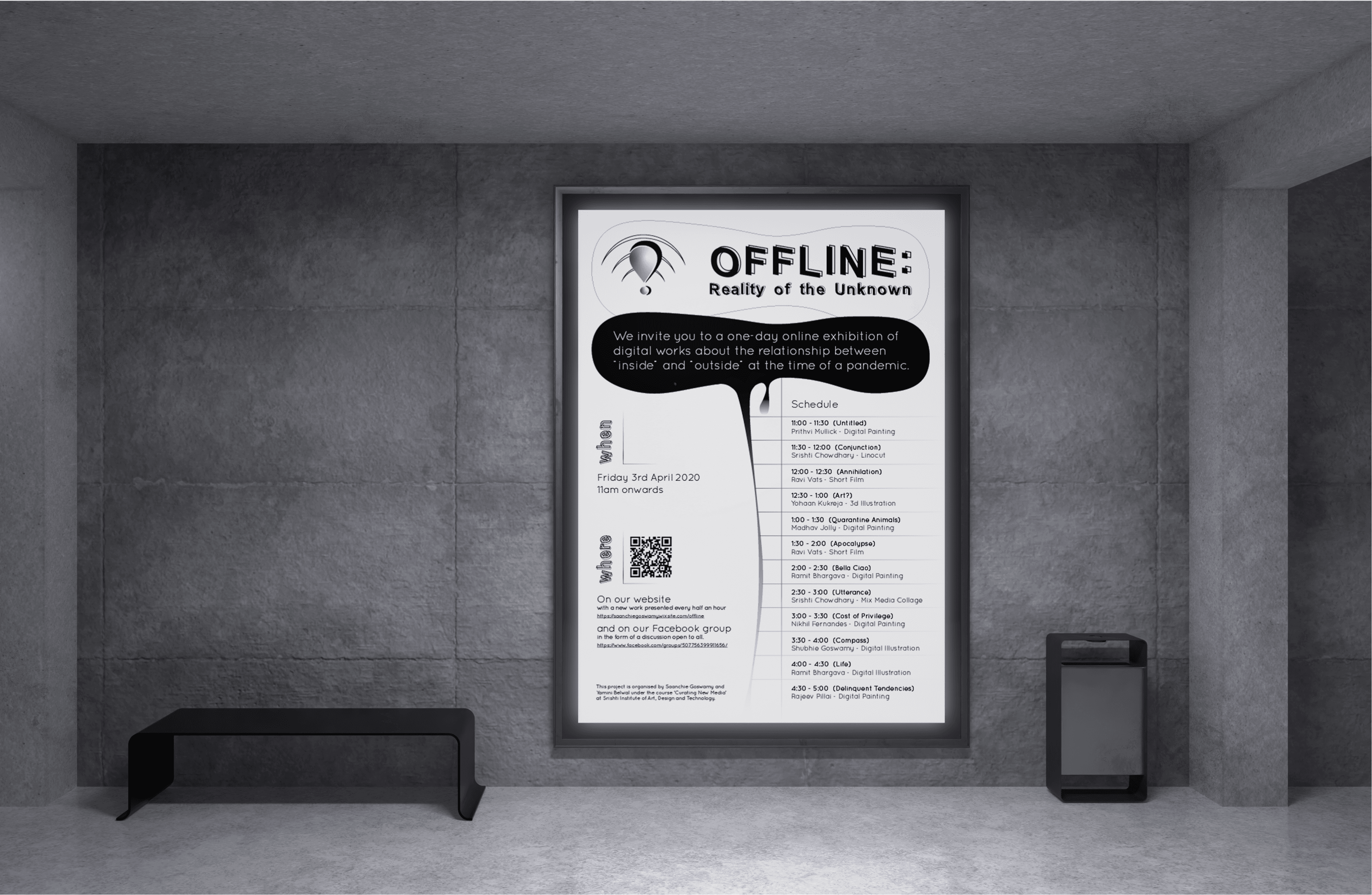
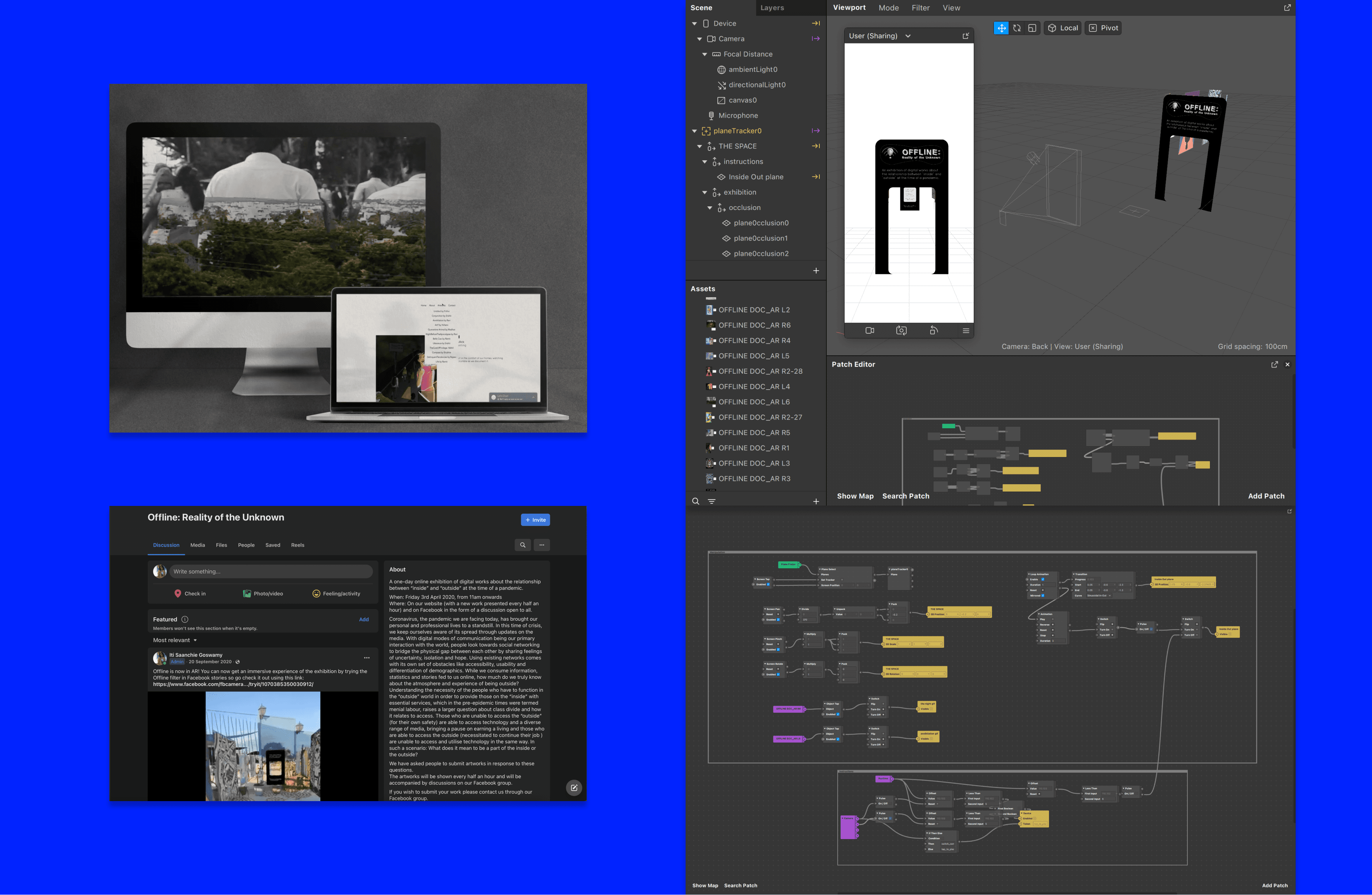
The exhibition asked artists to sit with this discomfort. Works were released through a dedicated website, one every thirty minutes, turning the act of viewing into something closer to waiting. Alongside it, a Facebook group became the public forum: open, unmoderated, a space where audiences could respond to the works in real time and speak directly to the artists. The medium was deliberate. Facebook, with its uneven but wide reach across Indian demographics, reflected the same tensions the exhibition was interrogating.
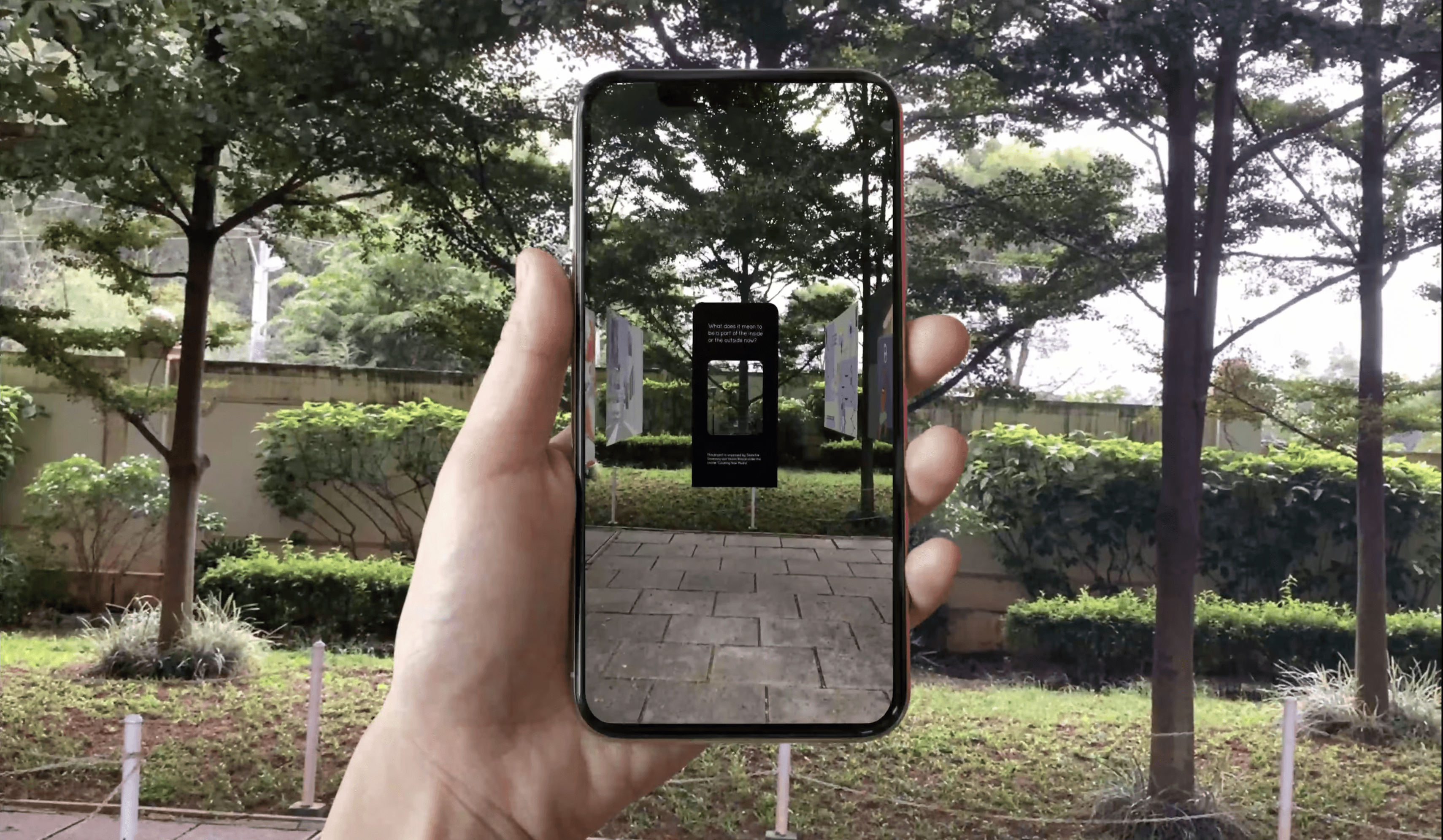
A later iteration pushed further. An augmented reality component allowed viewers to encounter the works inside their own physical spaces, the artwork bleeding into living rooms and windows and walls. The inside and the outside, briefly, in the same frame.
Offline was organised by Saanchie Goswamy and Yamini Belwal as part of the course Curating New Media, facilitated by Marialaura Ghidini at Srishti Institute of Art, Design and Technology, Bangalore.
Source:
Offline
New Media Curation
September 2020
other experiments