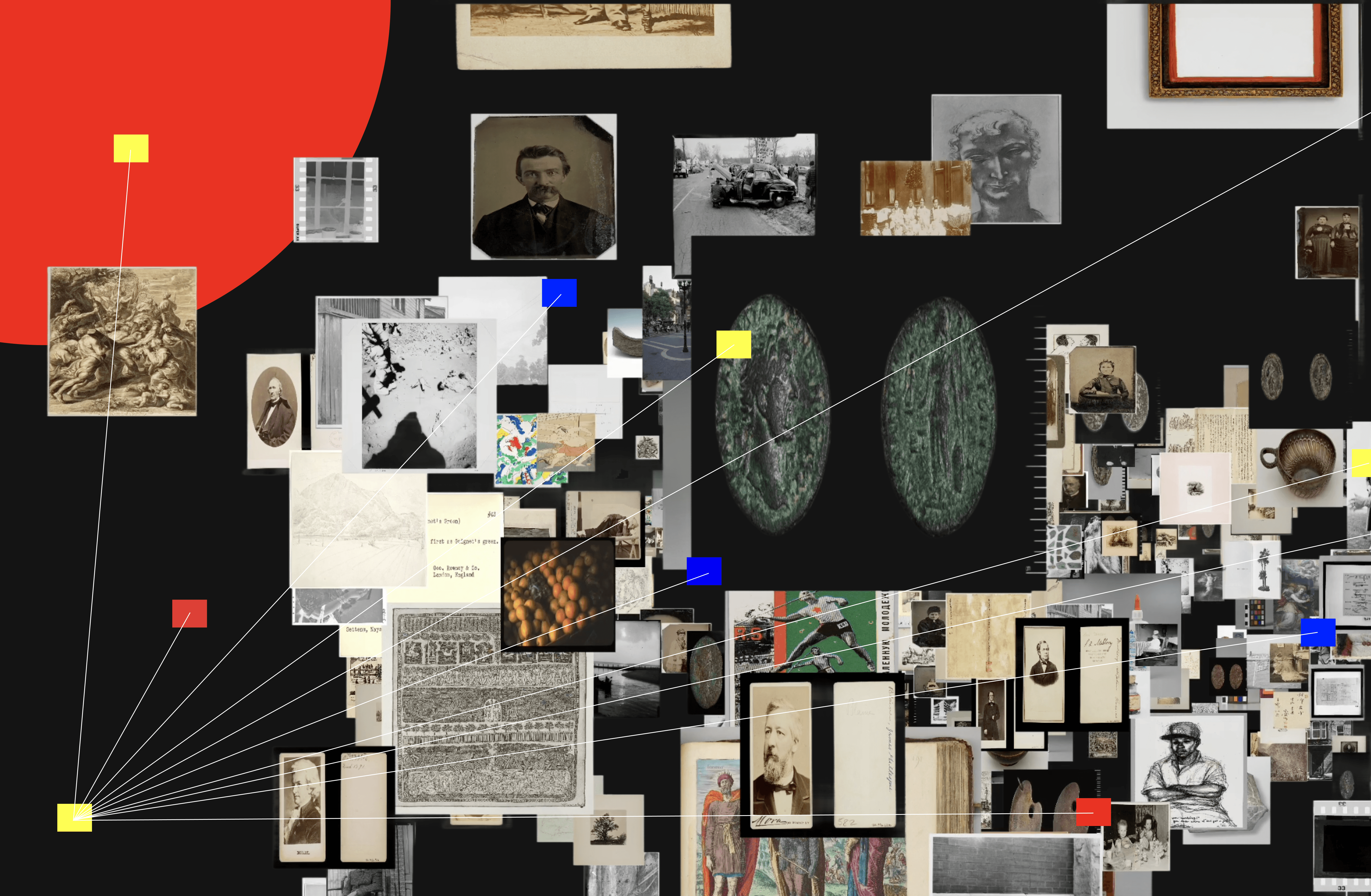
Every museum catalogue is an argument. It decides what an object is called, where it came from, and who gets to say so. For centuries, that argument has been made in one direction.
Decolonising Discovery asks what it would take to redesign museum cataloguing systems from the ground up, starting not with the institution but with the communities whose objects those systems hold. The thesis centres a foundational provocation: museums for whom, and to do what?
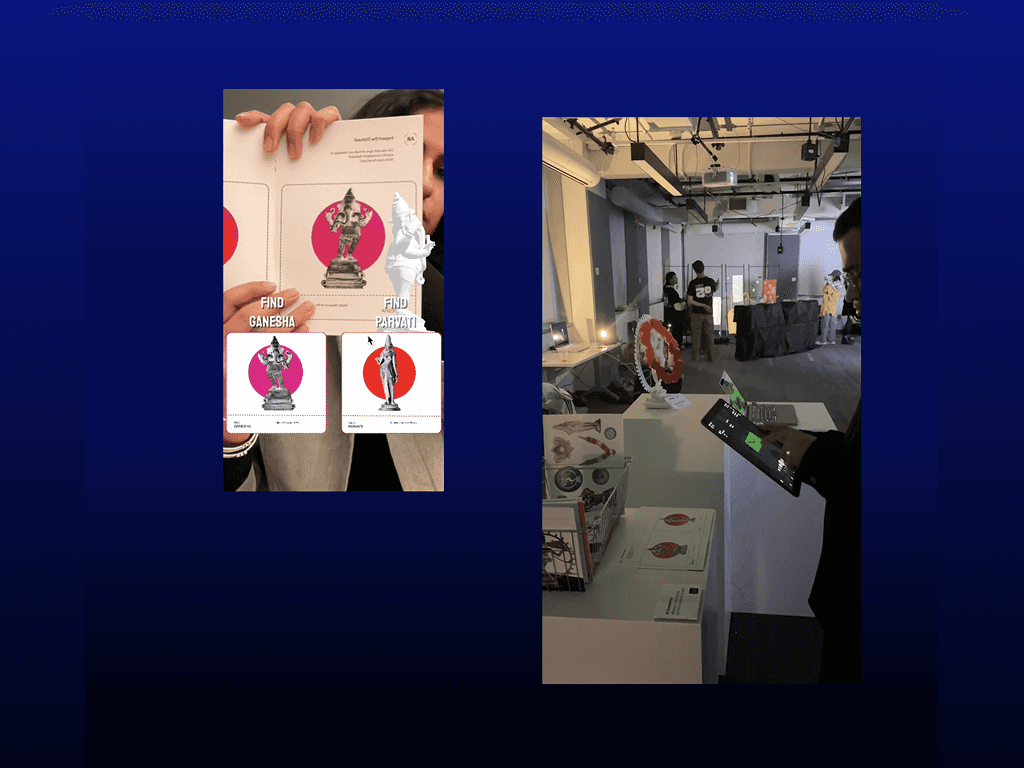
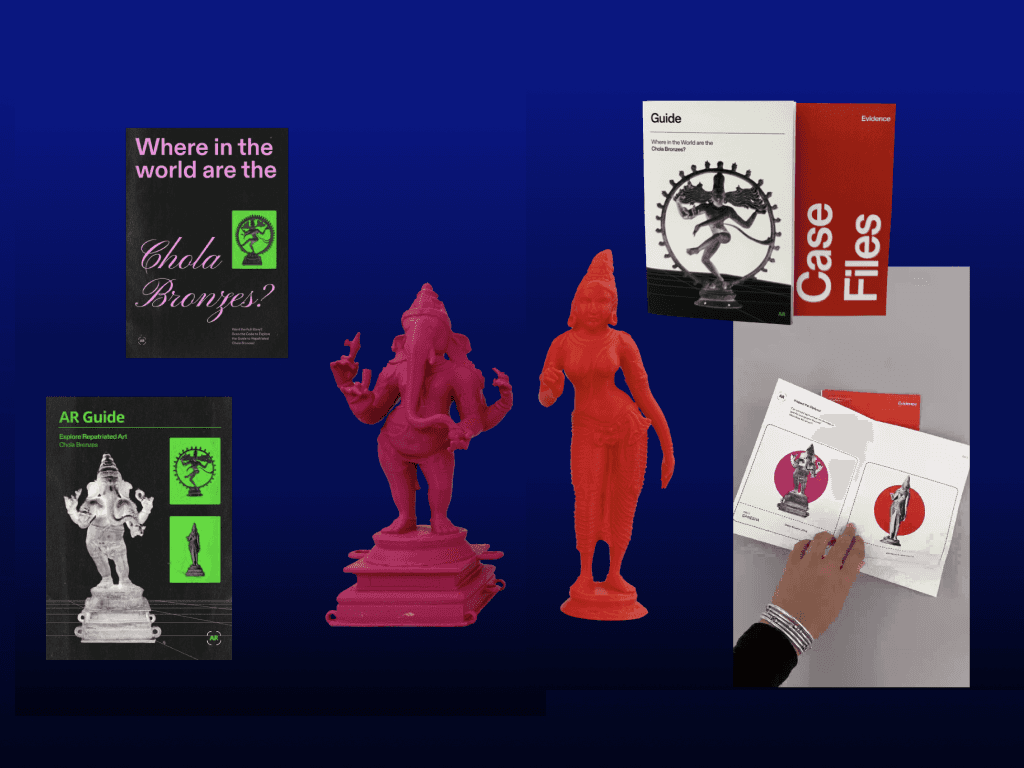
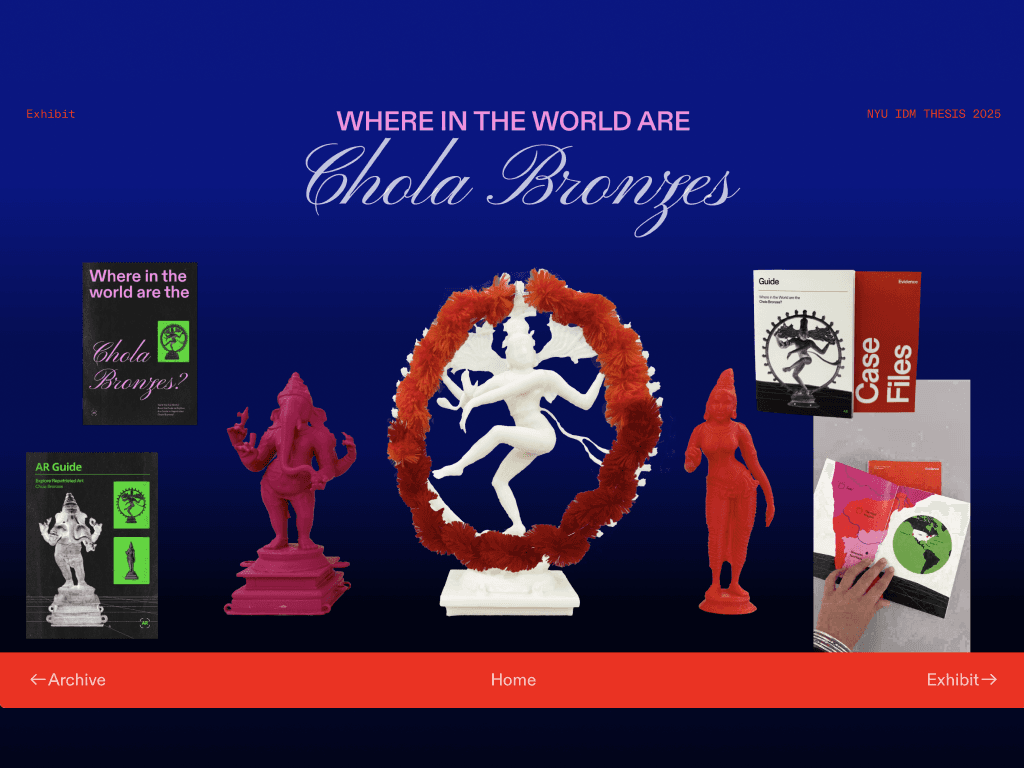
The Chola Bronzes serve as the primary case study. Cast between the 9th and 13th centuries in South India, these objects now sit in collections across Europe and North America, many acquired under colonial administration. The exhibit brought three 3D-printed bronzes together in one space, each sourced from a different American institution. An AR-activated booklet cast viewers as repatriation detectives, tracing the provenance of each object and enacting, symbolically, the process of return.
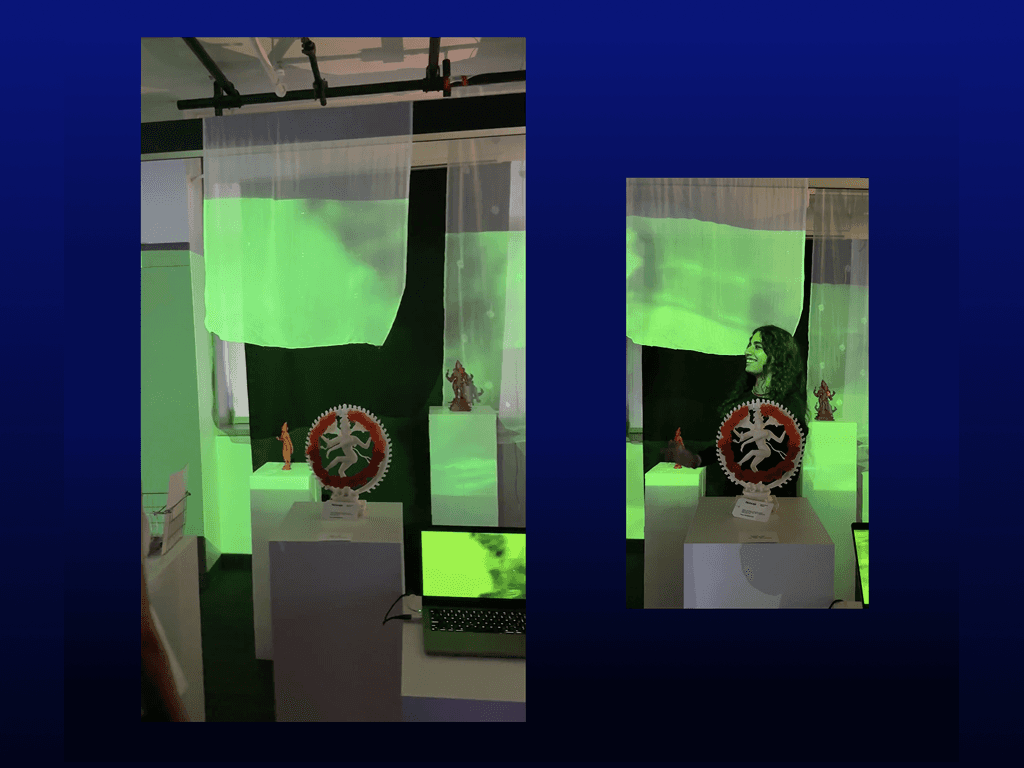
At the centre stood a garlanded Nataraja. When the garland was in place, a projection showed a Bharatanatyam dancer in performance, restoring the murti to the ritual context he was made for. When the garland was removed, the projection shifted to a catalogue of every object repatriated to India, making the scale of colonial looting visible at a glance. The same object. Two completely different frames.
Since 2022, the Met, the V&A, and other major institutions have begun returning Chola Bronzes to India. The research sits directly at this intersection of design, restitution, and ongoing institutional reckoning.
Decolonising Discovery
New Media Curation
May 2025
other experiments